Home >> News >> Industry News
Editor Takes You Through Some Basic Knowledge of Petroleum Drilling Rigs |
作者:本站 发布时间:2025-03-10 浏览:60次 |
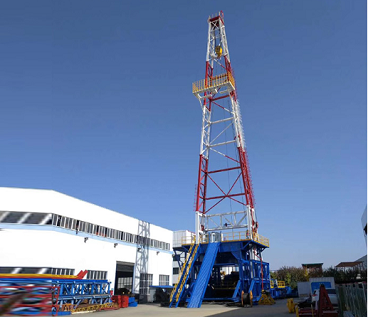
A petroleum drilling rig is used to break rocks and drill into the ground to a specified depth for the extraction of oil or natural gas. A typical petroleum drilling rig is mainly composed of eight parts: power unit, transmission unit, working unit, and auxiliary equipment. It generally has eight major systems (hoisting system, rotary system, drilling fluid circulation system, transmission system, control system and monitoring instruments, power transmission system, drilling rig base, and auxiliary equipment system), which must be capable of tripping and rotating drilling, as well as circulating washing of the well. The main equipment includes: derrick, crane, winch, traveling block, hook, turntable, water valve, power water valve, and drilling pump (commonly used parts on-site), power engine (diesel engine, electric motor, gas turbine), linkage system, solids control equipment, blowout prevention equipment, etc. Hoisting System The hoisting system is designed to lift and lower drilling tools, set casing, control the weight of the drill bit, and feed the drilling tools. The hoisting system includes winches, auxiliary brakes, cranes, traveling blocks, hooks, steel cables, lifting rings, lifting clamps, lifting tongs, and slips. When lifting, the winch drum winds the steel wire rope, and the crane and traveling block form a secondary pulley system. The hook rises, and through lifting rings and lifting clamps, the drilling tools are hoisted. When lowering, the drilling tools or casing columns descend under their own weight, and the speed of descent is controlled by the braking mechanism and auxiliary brakes. During normal drilling, the feed speed of the drilling tools is controlled by the brake mechanism, applying part of the weight of the tools as drilling pressure to break the rocks. Rotary System The rotary system is a typical system for rotary drilling rigs. Its function is to rotate the drill tools to break the rock layers. The rotary system includes the rotary table, water valve, and drill tools. Depending on the type of wellbore, the composition of the drill tools varies, generally including square drill pipe, drill pipe, drill collars, and drill bits, as well as stabilizers, shock absorbers, and couplings. The drill bit is the tool that directly breaks the rock. There are types such as roller cone bits, diamond bits, and drag bits. The drill collars are thick-walled, heavy tools used to apply weight to the drill bit. The drill pipe connects the surface equipment with the downhole equipment and transmits torque. The square drill pipe has a square cross-section. The rotary table rotates the entire drill string and drill bit through the square drill pipe. It bears the weight of the drill tools and achieves rotational movement while providing a high-pressure mud channel. Circulation System The petroleum drilling rig is equipped with a circulation system to transport the cuttings from the bottom of the well to the surface, cool the drill bit, and protect the wellbore from collapse and other drilling accidents. The circulation system includes the drilling pump, surface manifold, mud tank, mud purification equipment, etc. The surface manifold includes high-pressure manifolds, standpipes, hoses, etc. The mud purification equipment includes vibrating screens, desanders, desilters, and centrifuges. The drilling pump draws mud from the mud pit. The mud is pressurized by the pump and flows through high-pressure manifolds, standpipes, and hoses, entering the water valve. From the water valve, it flows through the hollow drill tools to the bottom of the well. During discharge, the rock cuttings are carried back to the surface by the mud flowing through the annular space between the wellbore and the drill tools. The mud returning from the bottom is purified using mud purification equipment before being reused. Power Equipment The hoisting system, circulation system, and rotary system are the three main working units of a drilling rig, providing power for drilling operations. They can work together to complete drilling tasks. To provide power to these working units, the rig is equipped with power equipment. The power equipment includes diesel engines, AC motors, and DC motors.
|