Home >> News >> Company News
An Article to Help You Understand Related Knowledge About Oil Drilling Rigs |
作者:本站 发布时间:2025-03-10 浏览:79次 |
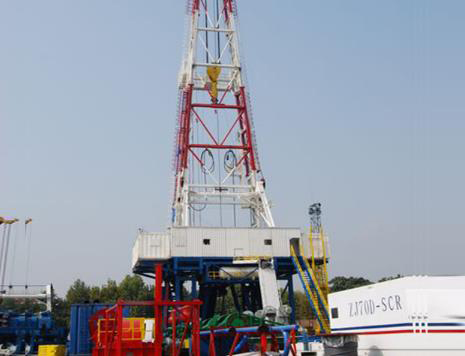
Oil Drilling Rigs: The Comprehensive Encyclopedia of Petroleum Drilling Knowledge Formation Pressure Coefficient The formation pressure coefficient is the increase in formation pressure for every 10 meters of depth in a formation. Low-pressure anomalies and high-pressure anomalies: Generally, the deeper the oil layer, the higher the pressure. Most oil reservoirs have pressure coefficients ranging from 0.7 to 1.2. A pressure coefficient lower than 0.7 is considered abnormally low pressure, while a coefficient greater than 1.2 is considered abnormally high pressure. Oil Well Acidizing The purpose of acidizing is to make the acid solution penetrate radially into the formation, thereby enlarging the pore space and dissolving the particles that block the space, which improves the permeability around the wellbore. This process aims to enhance production. Fracturing Acidizing Fracturing acidizing is the process of injecting acid into the formation under pressure sufficient to open fractures or existing fractures in the formation. This method is mainly used for sealing oil and gas wells in deep or low-permeability areas. Fracturing Fracturing is the process of creating fractures in the oil layer through hydraulic action, also known as hydraulic fracturing. The fracturing process involves injecting a high-pressure, high-flow liquid with a certain viscosity into the oil layer to increase permeability. The most commonly used fracturing fluids are: water-based, oil-based, emulsified, foam, and acid-based fracturing fluids. High-Energy Gas Fracturing High-energy gas fracturing uses solid rocket propellants or liquid explosives to ignite and detonate in the wellbore oil layer, generating large amounts of high-pressure, high-temperature gas. The oil layer forms radial fractures, typically 2-5 meters long, within milliseconds to a few seconds. After the shockwave from the detonation dissipates, the fractures do not completely close, thus alleviating blockages and significantly improving permeability near the bottom. This technique is known as high-energy gas fracturing. The advantages of high-energy gas fracturing include: no need for large fracturing equipment, no need for a large volume of fracturing fluid, no injection of proppants, ease of operation, minimal or no damage to the formation, and low cost. Oilfield Development Oilfield development refers to the entire process of extracting underground oil resources to the surface, based on the reasonable layout and production sequence of oil wells, along with technical measures like adjusting the working systems of the oil wells. Oilfield Development Process for Oil Drilling Rigs The oilfield development process refers to the work sequence from detailed exploration to full-scale development of the oilfield: Place exploratory wells along oil-bearing structural zones to quickly control the oil-bearing areas. Drill data wells within the controlled oil-bearing areas to understand the characteristics of the oil layers. Conduct zonal oil testing to obtain the production parameters of the oil layers. Set up a production trial zone to further understand the characteristics and variation patterns of the oil layers. Conduct a comprehensive study using core samples, well logging, oil testing, and production tests to create layered comparison diagrams, structural diagrams, and fault distribution diagrams, and determine the reservoir type. Design the oilfield development plan. Based on reliable and stable reservoir data, drill the basic well network. The wells drilled will not be put into production immediately. After drilling, compare all the oil sand bodies across layers and revise and adjust the initial plan. After production wells and water injection wells are put into production, collect actual production and pressure data, revise the original design parameters, and develop specific production and water injection plans for each stage of development. Due to the different conditions in various regions, the development process may vary. Reservoir Drive Types Reservoir drive refers to the main driving force that drives oil out of the formation during oil extraction. The driving energy of the reservoir varies at different stages of oilfield development. The driving modes can be categorized into hydraulic drive, gas pressure drive, solution gas drive, and gravity drive. In practice, multiple driving methods can exist simultaneously at different stages of the oilfield development process. This concludes the content on related knowledge about oil drilling rigs. For more related information, stay tuned for more updates!
|