Home >> News >> Product Q&A
I Did not Realize There Were So Many Classifications in Petroleum Drilling! Let the Editor Share Them with You |
作者:本站 发布时间:2025-03-10 浏览:68次 |
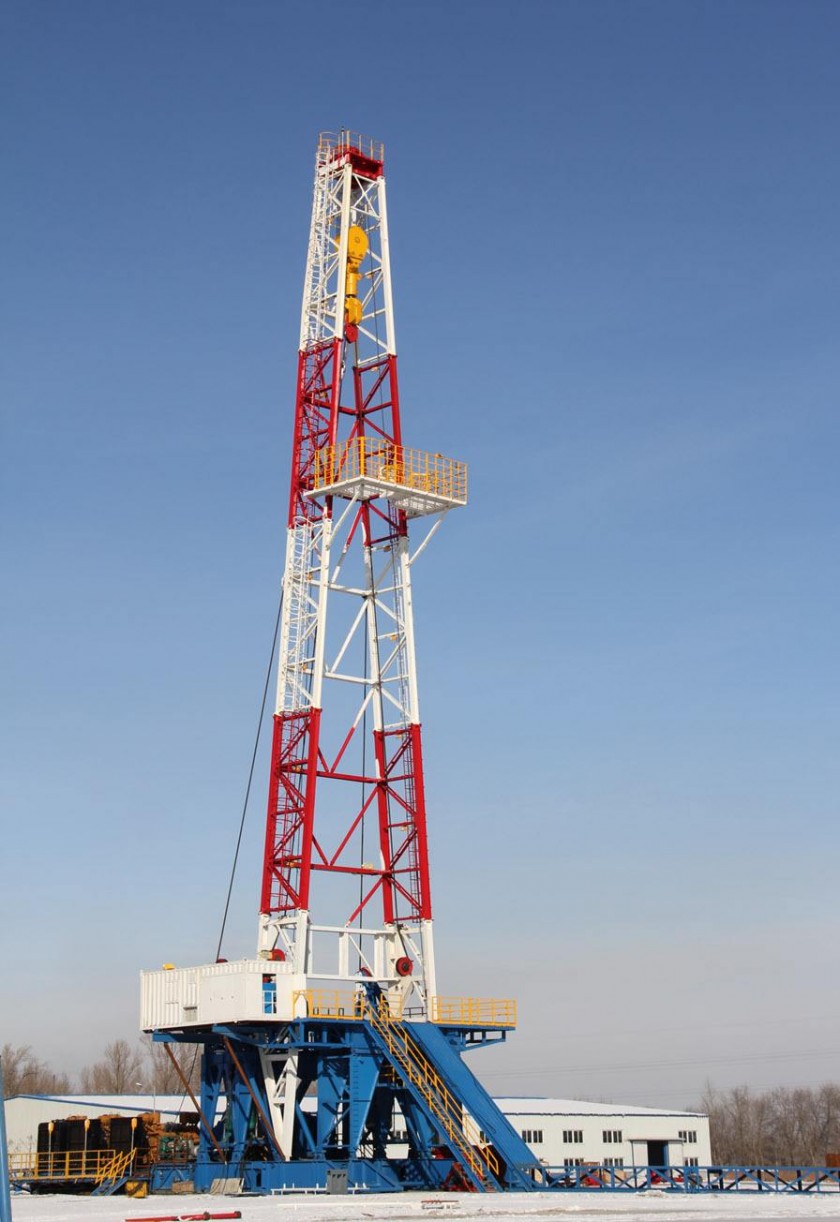
Petroleum drilling can be classified based on the purpose of drilling, the wellbore trajectory, drilling environment, and well depth. Let’s take a closer look at the different classifications. 1. Exploration Wells and Production Wells (a) Exploration Wells Exploration wells are drilled to obtain geological data and include geological wells, pre-exploration wells, detailed exploration wells, and appraisal wells. Exploration wells are typically vertical wells. Pre-exploration Wells: These wells are drilled in favorable traps identified through seismic surveys and geological studies to discover oil and gas reservoirs. They can also be drilled in known oil fields to discover new reserves. Detailed Exploration Wells: These wells are drilled in identified oil and gas traps to determine the boundary and reserves of oil and gas, and to study the formation and production potential of the reservoirs. Appraisal Wells: These wells are drilled after a pre-exploration well has discovered an oil or gas accumulation, to determine the area and geological reserves of the oil and gas trap. Exploration wells require more time and higher costs due to the uncertainty of formation conditions, the need for core sampling, and geological data collection. Offshore exploration wells are typically drilled using mobile drilling rigs. (b) Production Wells Production wells, also known as development wells, are drilled during the oilfield development phase for oil and gas production. These include oil (gas) wells, injection (water or gas) wells, and adjustment wells. Drilling production wells generally doesn't require core sampling, as the formation conditions are clear, allowing for faster drilling with lower costs. Oil (Gas) Wells: These wells are drilled during oilfield development to extract oil and natural gas and are divided into production oil wells and gas wells. Injection (Water or Gas) Wells: These wells are drilled for enhanced oil recovery by injecting water or gas into the reservoir to supplement and optimize formation energy. There are positive injection wells (injecting water from the tubing to the formation) and reverse injection wells (injecting water from the casing to the formation). Adjustment Wells: These are supplemental wells drilled on the basis of the original well network to improve the efficiency of oilfield development, either as individual scattered wells or grouped in dense patterns. 2. Directional Wells In petroleum drilling, in addition to vertical wells, wells drilled along a designed trajectory for specific purposes are known as directional wells, including horizontal wells and inclined wells. With the advancement of drilling technology, since the 1990s, the development focus has shifted to high-angle wells, horizontal wells, and extended reach wells to meet the needs of oil and gas field development. (a) Horizontal Wells Horizontal wells are designed with an inclination angle between 86° and 120° and are drilled along (or nearly along) the horizontal direction for a certain length. Horizontal wells increase the exposed area of the producing formation, improving oil production and recovery rates. Horizontal well technology has been developed since the 1990s. They can be classified into four types based on the radius of curvature: long, medium, medium-short, and short. Horizontal well drilling is relatively difficult and usually requires special equipment, drill tools, instruments, and techniques. (b) Inclined Wells Inclined wells are designed with an inclination angle not exceeding 85°, and they are categorized into low-inclination, medium-inclination, and high-inclination wells, with medium-inclination wells being the most commonly used. (c) Multilateral Wells In oilfield development, due to surface, environmental, and land use constraints, multiple directional wells and one vertical well are often drilled on the same drilling pad or platform. These are collectively known as multilateral wells. The distance between the wellheads is typically 2-3 meters. Multilateral wells help reduce construction costs for drilling pads or platforms and facilitate oilfield production management, and they are widely used in offshore oilfield development. 3. Deep Wells and Ultra-deep Wells Oil wells are categorized based on well depth (H) as follows: Shallow Wells: H ≤ 2500 meters Medium-depth Wells: 2500 meters < H ≤ 4500 meters Deep Wells: 4500 meters < H ≤ 6000 meters Ultra-deep Wells: 6000 meters < H ≤ 9000 meters Super Ultra-deep Wells: H > 9000 meters
|